Top 15 World-Famous Mathematical Geniuses
Mathematics is often described as “the highest form of human intellectual endeavor.” In this realm of pure abstraction, logic, and creativity, extraordinary minds have emerged across history—individuals whose ideas reshaped not only mathematics itself but also physics, computing, philosophy, and the broader trajectory of civilization.
This article presents a ranking of the world’s most famous genius mathematicians, from 15th place to 1st, based on four criteria: historical impact, originality, scope of contributions, and influence on later generations. Each mathematician’s achievements and legacy are explained in a clear, accessible way.
15. Pythagoras
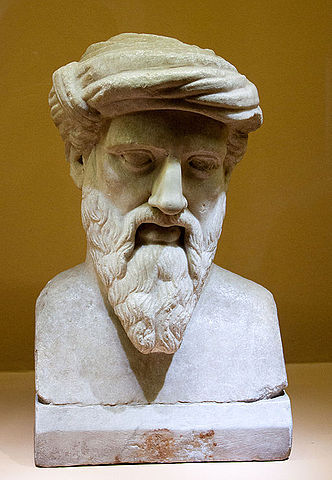
Era: 6th century BCE
Key Contributions: Pythagorean theorem, numerical mysticism
Known for the iconic theorem that bears his name, Pythagoras systematized the relationship between right triangles and number. Through his influential Pythagorean school, he connected numbers to philosophical and spiritual ideas. His belief that “all things are number” helped establish the philosophical foundations of mathematics.
14. Joseph-Louis Lagrange
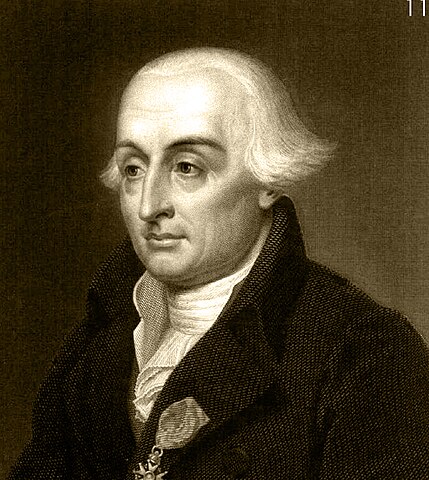
Era: 1736–1813
Key Contributions: Lagrangian mechanics, calculus of variations, number theory
Lagrange refined Newtonian mechanics into a generalized, elegant formalism still used today in physics and engineering. His work in analysis and number theory was monumental, earning him the reputation of one of the greatest 18th-century mathematicians.
13. Georg Cantor
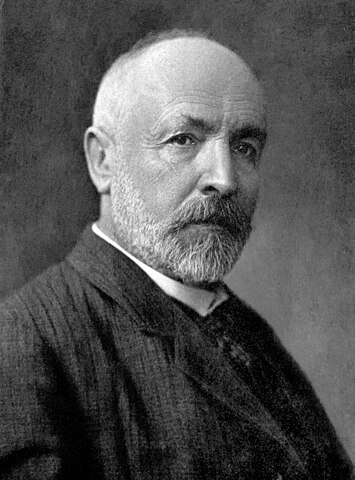
Era: 1845–1918
Key Contributions: Set theory, hierarchy of infinities
Cantor revolutionized mathematics by introducing set theory and rigorously defining infinity. His discovery that infinities come in different sizes fundamentally transformed mathematical logic, and his influence reached far beyond mathematics into philosophy.
12. Sophie Germain
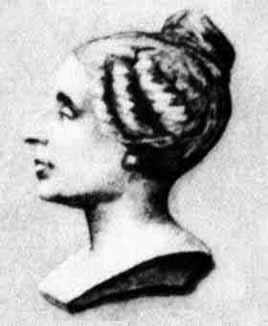
Era: 1776–1831
Key Contributions: Number theory, elasticity theory, groundwork for Fermat’s Last Theorem
Despite facing severe discrimination for being a woman, Germain pursued mathematics independently and made foundational contributions to elasticity theory. Her work on “Germain primes” provided key insights for later progress on Fermat’s Last Theorem.
11. Évariste Galois
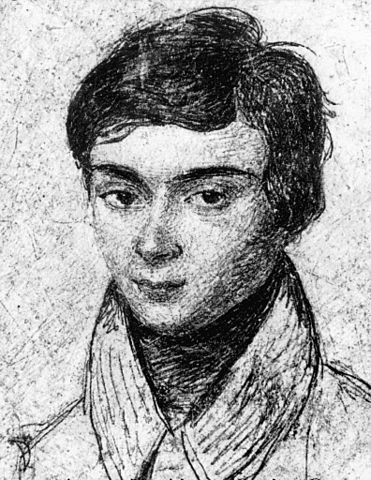
Era: 1811–1832
Key Contributions: Galois theory, group theory
A brilliant mathematician who died at age 20 under tragic circumstances, Galois created group theory and explained why higher-degree polynomial equations cannot always be solved by radicals. His ideas shaped the entire course of modern algebra.
10. John von Neumann
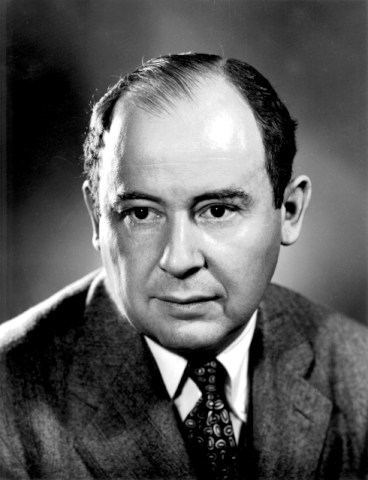
Era: 1903–1957
Key Contributions: Computer architecture, quantum theory, game theory
Often called “the greatest polymath of the 20th century,” von Neumann defined the architecture of modern computers, axiomatized quantum mechanics, and founded game theory. His intellect spanned mathematics, physics, economics, and engineering.
9. Andrew Wiles
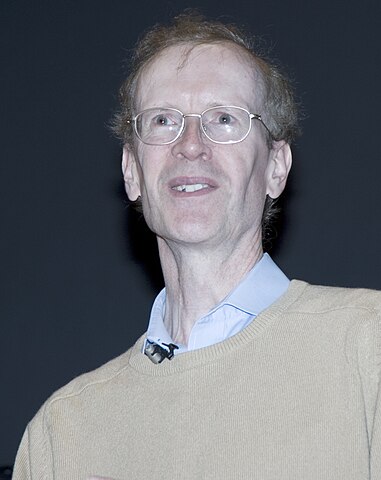
Era: 1953–
Key Contributions: Proof of Fermat’s Last Theorem
In 1994, Wiles solved the legendary Fermat’s Last Theorem after it had remained unsolved for more than 360 years. His proof, built on deep modern number theory, represented one of the greatest mathematical achievements of the century.
8. Blaise Pascal
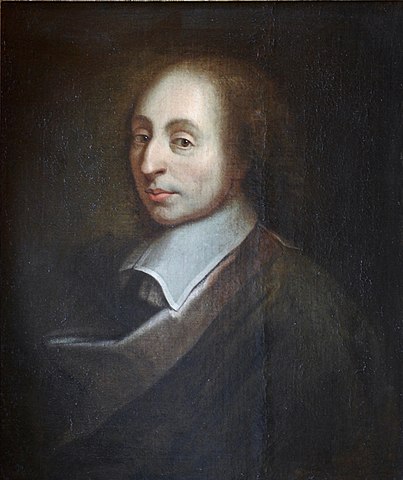
Era: 1623–1662
Key Contributions: Probability theory, Pascal’s triangle, early computing
Pascal helped found probability theory and studied the combinatorial structure now known as Pascal’s triangle. He also built an early mechanical calculator and contributed significantly to physics, theology, and philosophy.
7. Gottfried Wilhelm Leibniz
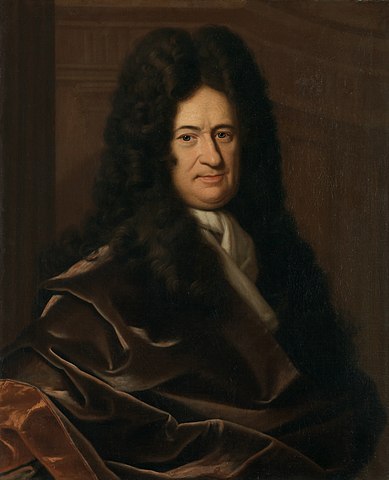
Era: 1646–1716
Key Contributions: Calculus (independently), binary system
Leibniz independently developed calculus and introduced much of the notation still used today. He also explored binary numbers, anticipating the foundations of modern computing. His philosophical writings are equally influential.
6. David Hilbert
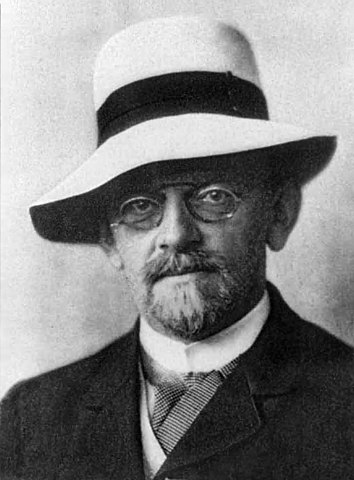
Era: 1862–1943
Key Contributions: Hilbert space, Hilbert’s 23 problems
Hilbert was one of the architects of modern mathematics. By presenting 23 open problems in 1900, he set the research agenda for the 20th century. His contributions span geometry, analysis, and mathematical logic.
5. Bernhard Riemann
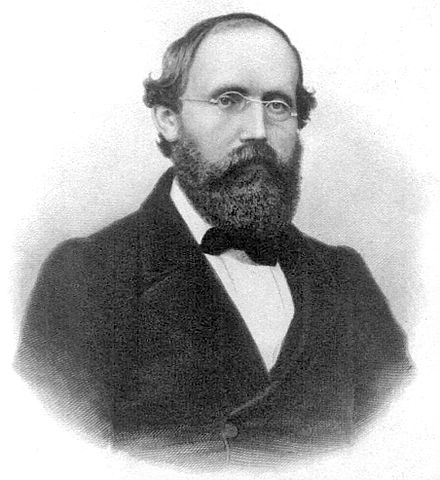
Era: 1826–1866
Key Contributions: Riemannian geometry, complex analysis, Riemann Hypothesis
Riemann developed the geometry that later enabled Einstein’s general relativity. His work in complex analysis reshaped the field, and the still-unsolved Riemann Hypothesis remains one of the most important open problems in all of mathematics.
4. Archimedes
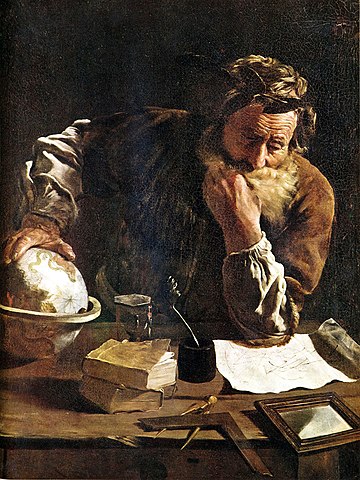
Era: 3rd century BCE
Key Contributions: Volume calculation methods, principle of buoyancy, early physics
Considered the greatest mathematician of antiquity, Archimedes pioneered methods equivalent to integral calculus, produced remarkably accurate estimates of π, and formulated the principle of buoyancy. His ingenuity extended to engineering and military devices.
3. Euclid

Era: 4th–3rd century BCE
Key Contributions: Elements, Euclidean geometry
The “Father of Geometry,” Euclid compiled Elements, a text that remained the standard mathematical reference for over two millennia. He established the formal, proof-based structure that continues to define mathematics today.
2. Leonhard Euler
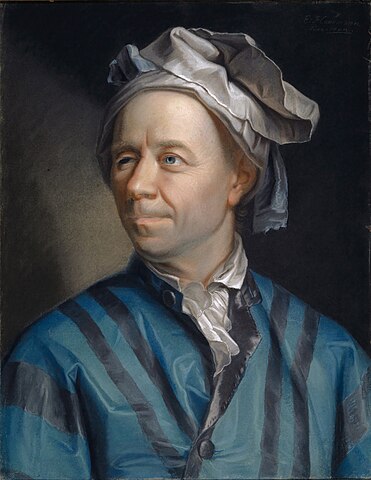
Era: 1707–1783
Key Contributions: Analysis, number theory, graph theory, Euler’s formula
Euler was one of the most prolific mathematicians in history. Even after losing his vision, he published at an astonishing pace and transformed nearly every branch of mathematics. His famous identity
e^{iπ} + 1 = 0
is often called the “most beautiful equation in mathematics.”
1. Carl Friedrich Gauss
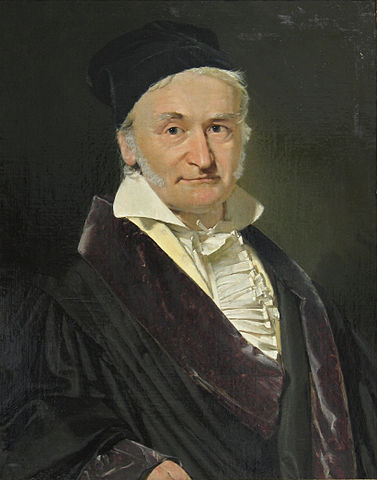
Era: 1777–1855
Key Contributions: Number theory, least squares, electromagnetism, astronomy
Known as the “Prince of Mathematicians,” Gauss demonstrated genius from childhood and revolutionized number theory, statistics, geometry, and physics. Concepts such as Gaussian distribution, Gaussian integers, and Gauss’s law testify to his staggering influence across science.
Conclusion
The mathematicians featured in this ranking were not merely skilled calculators—they were creators of concepts, thinkers who reshaped humanity’s understanding of the world. Their work continues to influence science, engineering, economics, technology, and philosophy today.
As mathematics advances and new mysteries arise, future geniuses may one day join this list, writing new chapters in the history of human thought.